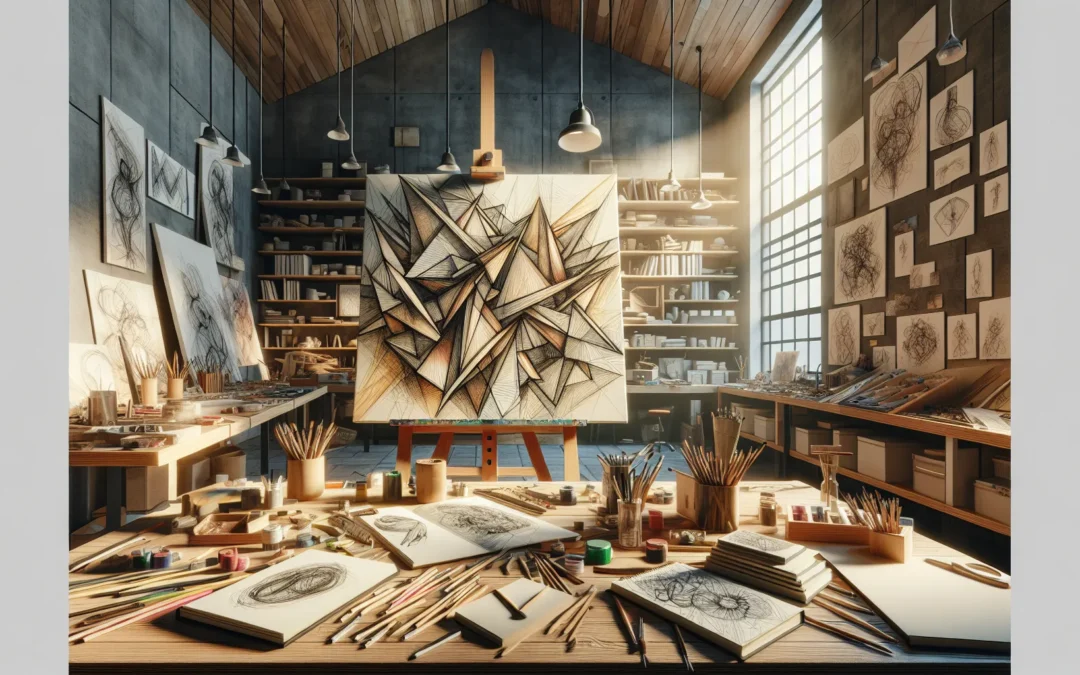
Have you ever looked at a beautiful piece of art and wondered how it all came together? Well, the secret sauce often lies in something as simple as an outline. Yes, we’re talking about outlines. They’re not just for essays and grocery lists: in the world of art, they play a crucial role too. They help us organize our thoughts, keep our creativity in check, and ensure our masterpiece doesn’t end up looking like a toddler’s finger painting. So, if you’re ready to jump into the world of outlines in art, we’ve got the brush ready.
Outline Definition Art

Outlines are the unsung heroes of the artistic process. Think of them as the safety net that catches our creativity before it takes a tumble. They help us visualize the structure of our artwork, providing a roadmap to guide us through the creative chaos. Without a solid outline, we might end up meandering aimlessly, which can lead to frustration and a less cohesive final product.
Besides, outlines allow us to experiment freely while ensuring that the core elements of our vision remain intact. They act like a frame around a canvas, giving shape and clarity to our ideas. When we approach our artwork with a well-defined outline, we can focus on the details without losing sight of the bigger picture.
Types of Outlines Used in Artistic Techniques
When it comes to outlines in art, there are various types that cater to different styles and techniques.
- Linear Outlines: These are straightforward and define the edges and contours of our subject. Think of a classic pencil sketch that captures the basic shapes before adding depth.
- Structural Outlines: Commonly used in form studies, these outlines break down complex subjects into basic shapes. By simplifying forms, we can better understand proportions and relationships between elements.
- Conceptual Outlines: These focus on thematic elements, guiding us in how to convey a story or emotion through interrelated concepts. They emphasize narrative coherence over mere visual structure.
- Layered Outlines: For mixed media artists, layered outlines allow for multiple interpretations and adjustments. We can add or remove layers as our vision evolves, helping to maintain flexibility throughout the artistic process.
Creating an Effective Outline in Art
Now that we understand the importance and types, how do we create an effective outline that works for us? Here are some practical steps:
- Identify Your Theme: What do we want to express? This is the foundation of our outline. Pinning down a central theme provides direction and purpose.
- Sketch the Basic Shapes: Start with light sketches that represent the primary forms of our artwork. These outlines don’t need detail: they’re just starter marks that show placement.
- Define Key Elements: As we progress, we should identify focal points and supporting elements that enhance our theme. This helps create a hierarchy within our outline.
- Review and Revise: Outlines aren’t set in stone. They should evolve as our artwork develops. Regularly revisiting our outline allows adjustments to be made, sometimes the best ideas emerge mid-creation.
- Keep It Loose: An effective outline should be a guide, not a restriction. The beauty of art lies in exploration: if we feel the need to deviate from our outline, that’s perfectly okay.
Common Mistakes in Outline Creation

Even the best of us can stumble when creating our outlines. Here are a few pitfalls to avoid:
- Overcomplicating the Outline: An outline should clarify, not confuse. If it becomes too intricate, it might stifle our creativity rather than enhance it.
- Ignoring the Spiritual Component: Sometimes, we get too caught up in the technical details and forget the emotional aspect of our artwork. Make sure our outline reflects the passion behind our vision.
- Neglecting to Adapt: Art is fluid, and so should our outlines be. We should never hesitate to modify our outlines as we explore new perspectives. Holding onto a strict outline can lead to artistic block.