Cleaning supplies for cleaning business help teams keep spaces safe and clean. The list below shows must-have products, tools, and systems. The guide helps owners choose items, buy smart, and store equipment.
Key Takeaways
- Build a core kit of cleaning supplies for cleaning business use that includes EPA-registered disinfectants, microfiber systems, mops, vacuums, PPE, and specialty cleaners by category to cover residential, commercial, and medical jobs.
- Label every container with product name and dilution, segregate incompatible chemicals, and train staff on correct dilution, contact times, and Safety Data Sheets to ensure safety and compliance.
- Buy core consumables in bulk or via subscriptions and calculate cost-per-use to prioritize higher-quality tools that reduce labor and replacement frequency.
- For specialized clients, select certified disinfectants and hypoallergenic or pet-safe products as required, document product claims with labels and SDS, and clearly communicate choices to clients.
- Organize mobile kits and vans with secure shelving, maintain an inventory tracking system with reorder points, and perform routine machine maintenance and waste-disposal per local regulations.
Essential Cleaning Supplies By Category
Hard-Surface Cleaners And Disinfectants
Hard-surface cleaners remove dirt and grease. Disinfectants kill germs on counters and hard floors. Choose EPA-registered disinfectants for public spaces. Keep separate cleaners for food-contact surfaces. Label each bottle with use and dilution.
Glass, Mirror, And Window Products
Glass cleaners remove fingerprints and smudges. Use a streak-free formula for windows and mirrors. Microfiber cloths lift glass soil without lint. Use squeegees for large windows.
Floor Care: Mops, Brooms, Vacuums, And Floor Solutions
Vacuums capture dust and debris from carpets. Microfiber mops pick up fine dirt on hard floors. Use low-moisture cleaners for wood floors. Have separate mops for restrooms and kitchens.
Bathroom And Kitchen-Specific Supplies
Toilets and sinks need heavy-duty cleaners and disinfectants. Use grout cleaners and lime removers as needed. For kitchens, use degreasers that are safe on food-contact surfaces. Store bathroom and kitchen supplies separately.
Tools, Accessories, And Microfiber Systems
Microfiber cloths and color-coded buckets speed work and reduce cross-contamination. Use ergonomic handles to cut fatigue. Keep brushes, scrapers, and grout tools on hand.
Disposable Supplies And Personal Protective Equipment (PPE)
Disposable wipes, paper towels, and trash liners cut cloth washing time. Provide gloves, eye protection, and masks for staff. Train staff to replace PPE after contamination.
Machines And Equipment For Efficiency
Floor scrubbers and carpet extractors reduce manual labor. Battery-powered vacuums improve mobility. Choose machines with easy parts access for quick servicing.
Specialized Supplies For Different Client Types
Residential Cleaning: Pet, Baby, And Surface Concerns
Residential clients often need pet-safe cleaners. Use low-odor, non-toxic options around babies. Offer stain removers for fabrics and upholstery. Communicate product choices to homeowners.
Commercial And Office Cleaning: High-Traffic Solutions
High-traffic sites need sturdy floor finishes and fast-dry cleaners. Use commercial-strength disinfectants for shared areas. Stock extra mats and trash liners to handle volume.
Medical, Daycare, And Food-Service Requirements
Medical and food-service sites need certified disinfectants and sanitizers. Follow local rules for contact time and dilution. Use single-use cloths where rules require them.
Eco-Friendly, Non-Toxic, And Hypoallergenic Options
Green Certifications And Ingredient Labels To Look For
Look for EPA Safer Choice and Green Seal labels. Check ingredient lists for known irritants. Choose hypoallergenic options for sensitive clients.
DIY Cleaning Solutions Versus Certified Green Products
DIY mixes often use vinegar and baking soda. Certified green products have tested claims and labels. Balance cost, safety, and performance when choosing.
Communicating Safety And Green Claims To Clients
Show product labels and safety data sheets on request. Explain why a product is safe for pets or children. Avoid broad claims without proof.
Buying Strategies, Budgeting, And Sourcing
Bulk Buying, Suppliers, And Subscription Services
Buy core items in bulk to cut cost. Use local suppliers for fast delivery. Try subscription services for steady supply of consumables.
Cost-Per-Use Calculations And Product Lifespan
Divide product cost by estimated uses to get cost per use. Track tool lifespan to plan replacement. Choose higher-quality tools if they lower labor time.
Where To Buy: Wholesale, Specialty, And Online Marketplaces
Wholesale clubs save on paper products. Specialty suppliers offer commercial-grade chemicals. Online marketplaces help compare prices and reviews.
Storage, Transport, And On-Job Organization
Mobile Kits And Vehicle Organization Best Practices
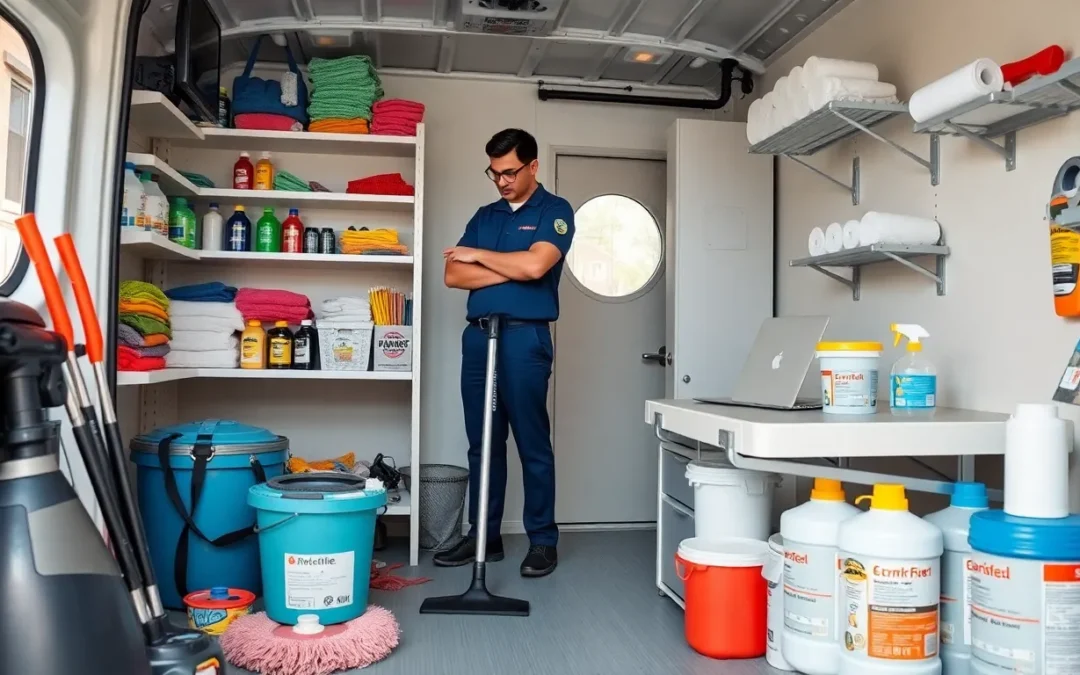
Use mobile caddies for daily runs. Fit vans with shelving and secure racks. Keep a stock kit for quick restocks between jobs.
Labeling, Segregation, And Safe Chemical Storage
Label each container with name and dilution. Segregate acids and bases to avoid reactions. Store chemicals in ventilated, locked areas.
Inventory Tracking And Restocking Checklists
Use a simple spreadsheet or app to track stock levels. Set reorder points for each item. Keep a restocking checklist in the vehicle.
Maintenance, Equipment Care, And Compliance
Routine Maintenance For Machines And Tools
Clean machines after each use. Replace filters and belts per manual. Keep a maintenance log for each machine.
Safe Handling, Disposal, And Regulatory Considerations
Follow label instructions for use and disposal. Use approved containers for chemical waste. Keep local disposal rules on file.
Training Staff On Products, Dilution, And Safety Data Sheets
Train staff on correct dilution and contact times. Teach staff to read safety data sheets. Run regular refresher sessions and skills checks.