The Pressure Cooker in Oil Paint
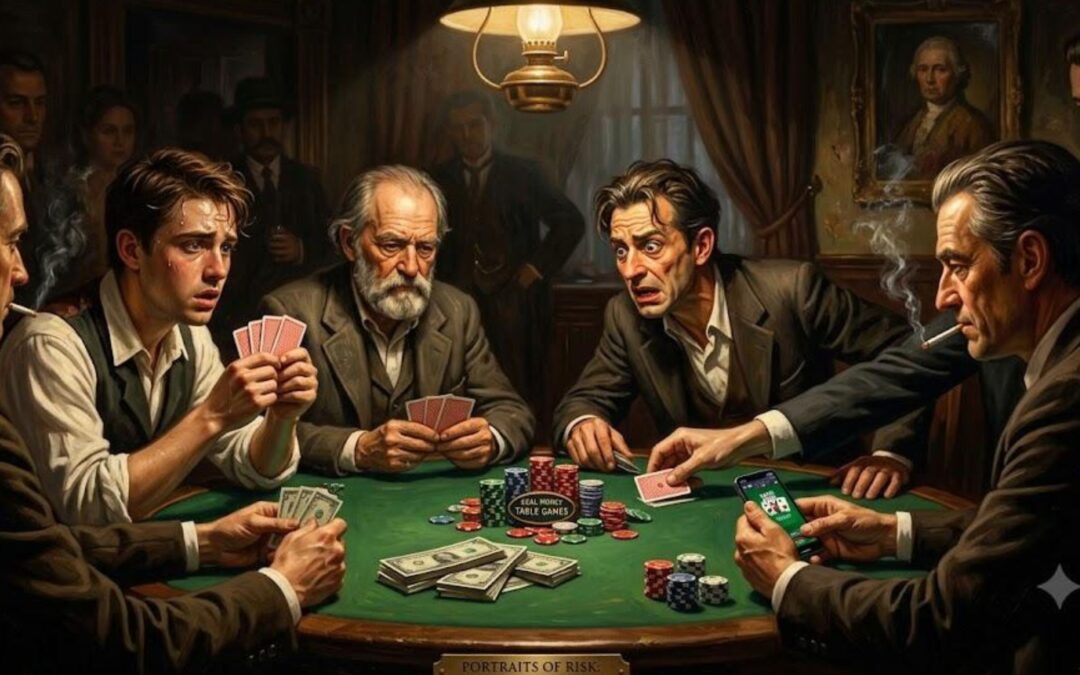
Let’s be real for a moment. Master painters never just documented a leisurely Friday night at the tables. They spent centuries dissecting the human nervous system under maximum distress. A single flipped card dictates ruin or riches in these rooms. The environment essentially forces the human brain into a vice grip—painters instinctively mapped this chaos centuries before clinical researchers started throwing around phrases like “intermittent reinforcement.” We see social masks completely dissolve. Greed, panic, and the sudden realization of financial death bleed onto the canvas.
Frankly, the transition from shadowy Roman taverns directly into our digital era relies on the exact same psychological triggers. We still stare at the same tension today. Take a moment to analyze the user interface when you log on to play real money table games online. The platform heavily leverages the exact same aesthetic cues that Baroque masters immortalized in oil paint. We just happen to be looking at pixels instead of crushed pigments.
Sweaty Nerves and the Anatomy of a Hustle
Forget the modern cinematic myth of the cool, collected hustler. The Cardsharps (1594) drops you straight into a grimy, suffocating panic attack. The artist himself was practically starving on the streets of Rome during this era. That raw desperation violently colors every inch of the canvas. You have these guys locked in an early version of poker, yet your eye instantly snaps to the terrified kid in the front. Our young thief awkwardly yanks a marked card from his pants under a ridiculous feathered hat. We see his darting gaze and damp forehead—the visceral terror of an amateur fully aware that getting caught results in a sudden knife to the ribs.
True genius here stems entirely from the strategic use of blind spots. Across the table, the older cheat peers at the oblivious mark’s hand. He signals the cards via split-fingered gloves (a practical modification designed to feel for markings without actually looking at them). The dupe trusts the invisibility of his hand just as the cheats trust the invisibility of their scheme. Caravaggio locks these figures together by precisely obscuring the older crook’s right eye with the peak of the young mark’s black hat. One wrong twitch shatters the illusion.
Modern X-ray analysis reveals the sheer audacity of Caravaggio’s technique. He painted this directly onto the canvas without preparatory drawings. He manipulated the wet paint with his bare fingers to get the raw naturalism of the cheat’s silk brocade perfectly right. The execution of the painting was as risky and improvisational as the game itself.
Weaponized Eye Contact in France
Georges de La Tour looked at that gritty street empathy and aggressively threw it out the window. His 1630s hit, The Cheat with the Ace of Clubs, runs on pure, weaponized eye contact. The actual card mechanic isn’t even the boss in this setup. A deeply cynical courtesan manages the entire extraction via shifty sideways glares, never opening her mouth once. She gestures with a solitary pointed finger. Our cheat then breaks the fourth wall. He stares directly at you, the viewer, forcing you into the deeply uncomfortable position of a co-conspirator.
We are looking at a fundamentally arrogant mark. The guy practically drowns in absurd gold lace, wholly detached from the financial ambush closing in on his wallet. La Tour paints him with his eyes nearly shut in self-absorption. The artist silently argues that an empty bank account is a well-deserved tax on vanity and lack of vigilance. This specific motif became a cornerstone of how the art world viewed the psychology of the loser.
Hitting Rock Bottom in Soho
William Hogarth decided to burn the entire concept of the wager to the ground in eighteenth-century London. Shadowy taverns had given way to sprawling, chaotic gaming houses. The Gaming House, part of his 1735 A Rake’s Progress series, ignores the mechanics of the cheat to focus solely on the brutal aftermath.
Tom Rakewell just blew his entire inheritance. He kneels in the center of the room in a state of unhinged fury. His wig is cast aside, his hands plead to the heavens, and he embodies the absolute basement of human dignity. You can practically hear the cultural decay happening in real-time. The room is so consumed by the myopic desperation of the game that no one notices a fire actively breaking out in the background. A random dog sits quietly in the corner—the lone creature in the entire building possessing a shred of actual loyalty or sense.
Stripping the Table Down to the Studs
Paul Cézanne eventually strips away all the melodrama, the hidden daggers, and the moralizing gaze. The Card Players strip away the hustle to observe regular farmhands locked in absolute, heavy silence. Nobody is going bankrupt here because you will not find a single coin in sight. The tension stems solely from the quiet, crushing concentration of a shared mental exercise.
Modern infrared studies reveal a fascinating artistic obsession. Cézanne heavily utilized speculative graphite underdrawing beneath his smaller canvases to perfect the structural geometry of his two final players. The men sit like stone statues. A simple wine bottle acts as the central vertical axis, anchoring the entire canvas. The table becomes a bulwark of comforting rural tradition holding the line against a confusing, rapidly industrializing modern world.
Nauseating Swings on the Riviera
The Norwegian Expressionist Edvard Munch views the elegance of Monte Carlo through a vastly different lens. Forget the polished academic realism of his contemporaries. The 1892 canvas At the Roulette Table in Monte Carlo aggressively tilts the floor plan. Nauseating reds slam against harsh greens to mimic the whiplash of losing your life savings.
Let’s be real about the wheel—mathematical logic just shatters when confronted with pure, chaotic luck. Munch paints the exact moment of suspension before the ball lands. He reduces the faces of the players to loose, mask-like approximations. The casino acts as a vacuum. Individuals pack tightly together, yet completely isolate themselves in their own internal turmoil. They desperately chase the next spin in a trance-like state.
Hacking the Nervous System
Artists intuitively documented cognitive distortions long before modern psychiatry bothered to classify them. The illusion of control and the psychology of the near miss are baked right into these canvases. Modern casino architects blatantly steal this exact visual framework.
That classic wool surface survives because it biologically hacks the human nervous system to keep players calm. Sixteenth-century aristocratic parlors originally used this heavy green fabric to simulate outdoor grass. Green soothes the eyes and reduces visual fatigue under harsh casino lighting today. It provides the optimal contrast for red and black cards. This color subtly whispers permission and prosperity to the player in a high-stakes environment flooded with aggressive auditory triggers.
Pixels, Progression, and the Timeless Trap
Digital interfaces simply deconstruct this physical reality today. The transition relies on a refined skeuomorphism. Vibrant green backgrounds and the physics-based animations of sliding chips are carefully calibrated to evoke the exact same psychological comfort as a physical table. The platform must project calm reliability and absolute fairness through progressive disclosure. Developers mask a massively complex matrix of regulatory compliance behind a clean, distraction-free dashboard.
The catch? The fundamental nature of the wager never actually changes. You engage in the exact same timeless ritual whether you are staring at the deep shadows of a Caravaggio canvas or the polished UI of a modern betting app. The medium evolves rapidly. The human nervous system, suspended in that singular moment of risk before the dealer reveals the card, remains exactly the same.