
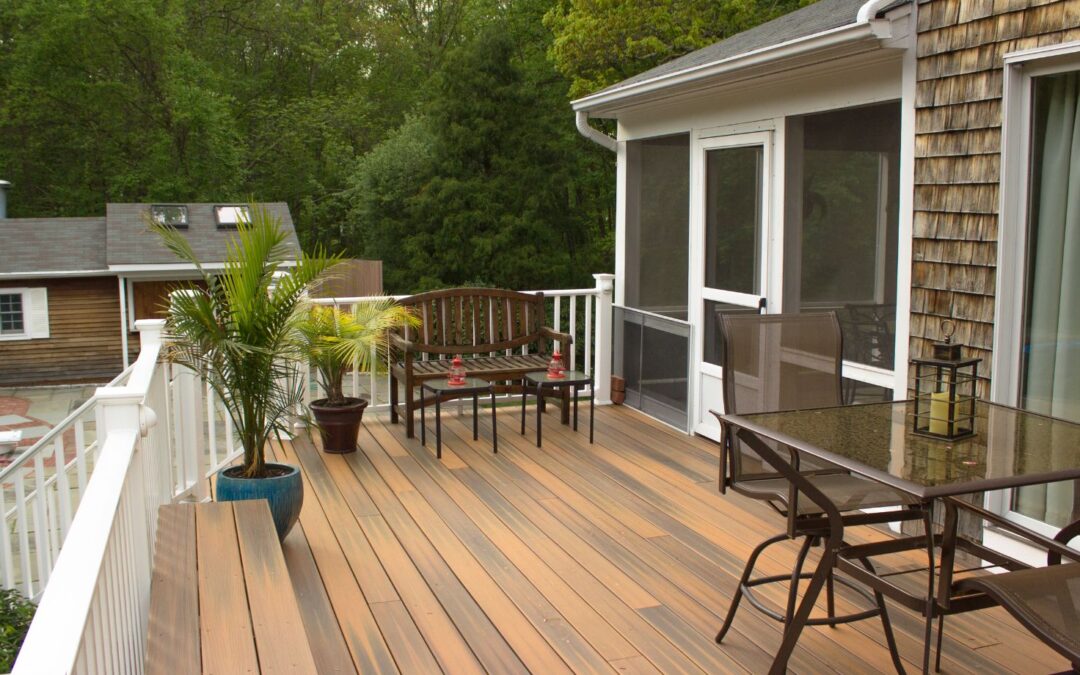
Composite deck cost is often reduced to a price per square foot, but that figure tells only part of the story. For most homeowners in the Seattle area, the total budget may also reflect property access, structural height, permit requirements, framing conditions, railing, stairs, and the way the deck must connect with the house and yard.
These practical requirements influence more than construction cost. They also shape the proportions, movement, maintenance needs, and everyday usefulness of the finished outdoor space. Comparing the complete deck system—not only the visible composite boards—creates a more realistic budget and a clearer view of long-term value.
What the Cost to Build a Deck Really Includes
The total project cost for a new composite deck includes the decking boards, substructure, footings, fasteners, railing, stairs, site preparation, professional installation, and permit fees when a permit is required. In Seattle, permit fees are calculated based on project value and may include an additional technology fee, so the exact amount depends on the proposed scope. Demolition and debris removal may also be required when an existing deck is being replaced. Elevated, multi-level, or difficult-to-access projects generally require more structural work than simple ground-level designs.
Deck building costs can range from $25 to $60 per square foot for standard projects. Composite decking costs between $5 and $14 per square foot. The composite figure describes the decking material rather than the complete installed structure. These national planning ranges should not be treated as Seattle-specific quotes because product lines, labor rates, permit requirements, design complexity, structural work, and site access can move the final price outside them.
This distinction explains why an online material estimate may be considerably lower than a contractor’s project quote. The board price does not include the substructure, footings, hardware, railing, labor, and site work required for a finished deck.
The following factors usually have the greatest influence on the complete deck budget:
| Cost factor | Why it affects the project price |
| Deck size | More square footage requires additional decking, framing, hardware, and labor. |
| Deck height and levels | Elevated and multi-level decks need more structural support, railing, stairs, and installation time. |
| Framing condition | New framing increases the scope, while resurfacing is possible only when the existing substructure is suitable for reuse. |
| Decking and railing | Product line, board profile, fastening system, and railing design can substantially change material and labor requirements. |
| Site access | Narrow access, slopes, and limited material-staging space can make demolition and installation more labor-intensive. |
| Existing deck removal | Demolition, hauling, and disposal add work before construction can begin. |
| Permits and design requirements | Fees and documentation depend on the location and scope of the structure. |
| Custom features | Borders, lighting, built-in seating, several stair runs, and complex board patterns require additional materials and installation time. |
Each decision influences both the total cost and the appearance, maintenance needs, and usability of the finished project.
Key Factors Beyond Deck Size
Deck size matters because a larger surface requires more boards, framing, hardware, and labor. Still, two deck projects with the same square footage can have very different budgets.
A simple rectangular deck is generally more cost-efficient than a design with angled edges, curves, several stair runs, or multiple levels. An elevated deck may also require taller posts, larger beams, additional railing, and more complicated installation work.
For example, a ground-level deck with easy backyard access may require less labor than a second-story deck built on a sloped property. Even if both designs have the same square footage, the elevated project may involve more structural planning, material handling, and safety equipment.
Multi-level deck designs generally cost more because each transition can require additional framing, stairs, railing, footings, and labor. The difference cannot be estimated accurately from square footage alone; it depends on the height, layout, structural plan, and number of connections between levels.
How Deck Material Costs Shape the Budget
Deck material costs vary significantly. Pressure-treated wood is often selected for its lower upfront cost, while homeowners may pay more for cedar, hardwoods, or other premium materials chosen for their grain, color, or aesthetic appeal.
Pressure-treated pine costs approximately $3 to $6 per square foot. Cedar decking typically ranges from $4 to $8 per square foot. Some hardwoods and other premium materials can cost more. These figures describe material pricing, not the total cost to build a deck.
Wood decking can create a warm, natural appearance, but regular maintenance is part of the long-term plan. Cleaning, staining, sealing, and repairs may be needed to protect natural wood from moisture and surface wear.
A composite deck usually has a higher upfront cost than a pressure-treated wood deck. However, composite decking generally requires less routine maintenance and does not need the same staining and sealing schedule as natural wood. Periodic cleaning is still necessary, but the upkeep is usually simpler.
Composite decking is generally selected for its lower maintenance requirements and resistance to many forms of surface deterioration associated with natural wood. However, choosing composite does not automatically guarantee a longer lifespan for the complete deck. Service life still depends on product selection, installation quality, drainage, ventilation, exposure, maintenance, and the condition of the supporting structure.
Why Labor Costs Matter as Much as Materials
Labor can represent a substantial share of the complete deck budget, but a reliable labor figure cannot be calculated from square footage alone. The scope may include site preparation, footings, framing, material cutting, board installation, stairs, railing, permit coordination, demolition, and cleanup.
Access also matters on Seattle-area properties. Local contractors may need additional time when materials must be carried through a narrow side yard, moved across an occupied property, or delivered to an elevated or sloped work area. Existing-deck removal and disposal further increase the labor scope before new construction or resurfacing can begin.
Complex board patterns, hidden fastening systems, and built-in features such as seating, lighting, or custom railing can also increase labor requirements. These additions may improve the usefulness and visual character of the deck, but they should be considered early in the deck budget.
How Decking Material, Built-In Seating, and High-End Features Affect the Final Cost
When planning their own deck, homeowners should not judge the higher upfront cost of composite only against the price of wood boards. A more useful comparison considers how the deck will look, function, and require care over the long haul.
Composite materials are available in a range of colors, grain patterns, and finishes. This allows the decking material to coordinate with siding, trim, railing, and other architectural features. A darker border can frame a lighter deck surface, while board direction can make a narrow outdoor space feel wider or guide the eye toward a garden or view.
Good design also considers movement. A dining table needs comfortable circulation around it. Stairs should connect naturally with the yard. Railing should provide safety without making the deck feel visually enclosed.
Built-in seating can reduce the need for bulky furniture, while multiple zones can give a larger composite deck more purpose. These decisions may affect material and labor costs, but they also determine whether the finished space feels like a thoughtful extension of the house.
Maintenance and Long-Term Planning
Wood decking and composite decking require different types of maintenance. Natural wood may need regular cleaning, staining, sealing, and occasional repairs. Without proper upkeep, moisture and weather exposure can lead to cracking, fading, or decay.
Composite decking requires less routine maintenance than natural wood, but low maintenance does not mean no maintenance. Dirt, leaves, and organic debris should still be removed, and the surface should be cleaned according to the manufacturer’s guidance.
Frequent repairs and refinishing can add to the long-run cost of a wood deck. Composite may reduce some of that work, although homeowners still need to inspect railing, stairs, framing, and connections.
The framing beneath composite boards may age differently from the visible deck surface. Before resurfacing, a qualified contractor should inspect joist spacing, the overall condition of the framing, structural connections, hardware, and any areas requiring repair. Composite boards should not be installed over an existing substructure simply because the framing remains visually intact.
How to Compare Deck Projects and Identify a Fair Price
An online calculator can provide a starting point, but an accurate estimate requires a property review and a defined project scope. Before comparing multiple quotes, homeowners should be prepared to discuss:
- approximate deck dimensions and height;
- new construction, full replacement, or resurfacing;
- the condition of any existing framing;
- preferred composite product and railing type;
- the number and location of stairs;
- demolition and debris removal;
- property access and material-staging space;
- permit and design requirements;
- lighting, seating, borders, or other custom features.
Estimates are easier to compare when each contractor is pricing the same structure, materials, and scope of work.
Homeowners considering custom composite deck construction services can use the consultation and design process to compare new construction with resurfacing, review materials, layouts, and railing options, and understand the complete project cost before work begins.
Working with composite deck builders serving Seattle also allows the design to reflect local site conditions, permit requirements, and the way the outdoor space connects with the home.
A successful composite deck is not simply the least expensive or the highest-end option. Its value comes from balancing cost, durability, maintenance, proportion, and everyday use. Thoughtful planning helps ensure that the final cost supports a deck that continues to feel intentional long after construction is complete.