A creative studio does not need to be large or luxurious to work well. For artists who spend hours painting, sculpting, assembling models, making jewelry, or working with other materials, the biggest improvements are often practical ones. Better lighting, cleaner air, more comfortable furniture, and smarter storage can change how the entire workspace feels.
The best upgrades should solve problems that repeatedly interrupt creative work. Instead of filling the studio with more equipment, focus on changes that make long sessions more comfortable, organized, and enjoyable.
Build a Better End-of-Day Routine
A productive studio setup should support the hours spent away from the workbench as well as those spent at it. Long creative sessions can make it tempting to continue working late, especially when a project is finally coming together, but having a clear stopping routine makes it easier to separate studio time from the rest of the evening.
Clean the immediate work area, put frequently used tools back in place, and write down the next step in the project before leaving. That way, there is less temptation to keep thinking about unfinished details later. Artists who already include CBD products in their personal evening routines may also explore options such as Medterra’s CBD sleep gummies for sale as part of the broader selection available for nighttime use.
Creating a deliberate transition out of work mode can be particularly valuable when the studio is located inside the home and there is no commute to provide that natural boundary.
Improve the Air Around the Workbench
Creative work can generate much more airborne material than it appears to at first. Sanding, cutting, spraying, painting, finishing, and working with dusty materials can all affect the immediate environment, particularly in a studio where projects continue for several hours at a time.
Good ventilation should be planned around the specific materials and processes being used. In larger or more demanding workspaces where airborne particles are a recurring concern, a commercial air scrubber can manage studio air and keep the working environment cleaner.
Equipment should always be selected for the actual materials involved, since different studio processes can require different ventilation, filtration, or protective measures.
Upgrade the Lighting Before Buying More Tools
Poor lighting makes detailed work harder than it needs to be. It can also affect how accurately artists judge colors, surfaces, edges, and small imperfections.
A studio benefits from layers of light rather than relying on a single ceiling fixture. General lighting should illuminate the room, while an adjustable task lamp can concentrate light directly on the workbench. Positioning is important because a badly placed lamp may create shadows precisely where detailed work is happening.
Natural daylight is valuable when available, but it changes throughout the day. Reliable artificial lighting allows the workbench to remain usable in the evening and during darker months without constantly adjusting the way you work.
Make the Workbench Fit Your Body

A workbench should match the type of work being performed rather than forcing the artist into an uncomfortable position for hours.
For detailed seated work, chair height and table height should allow the arms to rest naturally without constantly raising the shoulders. If projects involve standing, cutting, or applying downward pressure, a different surface height may be more comfortable.
An adjustable chair can be one of the most worthwhile studio purchases because it allows the seating position to change between tasks. A footrest can also improve comfort when the ideal workbench height leaves the feet without comfortable support.
Most importantly, arrange frequently used tools so that reaching, twisting, and repeatedly standing up are minimized.
Put Storage Within Reach of the Project
Studio organization works best when it follows the creative process. Supplies used constantly should be closest to the workbench, while occasional equipment can occupy shelves or cabinets farther away.
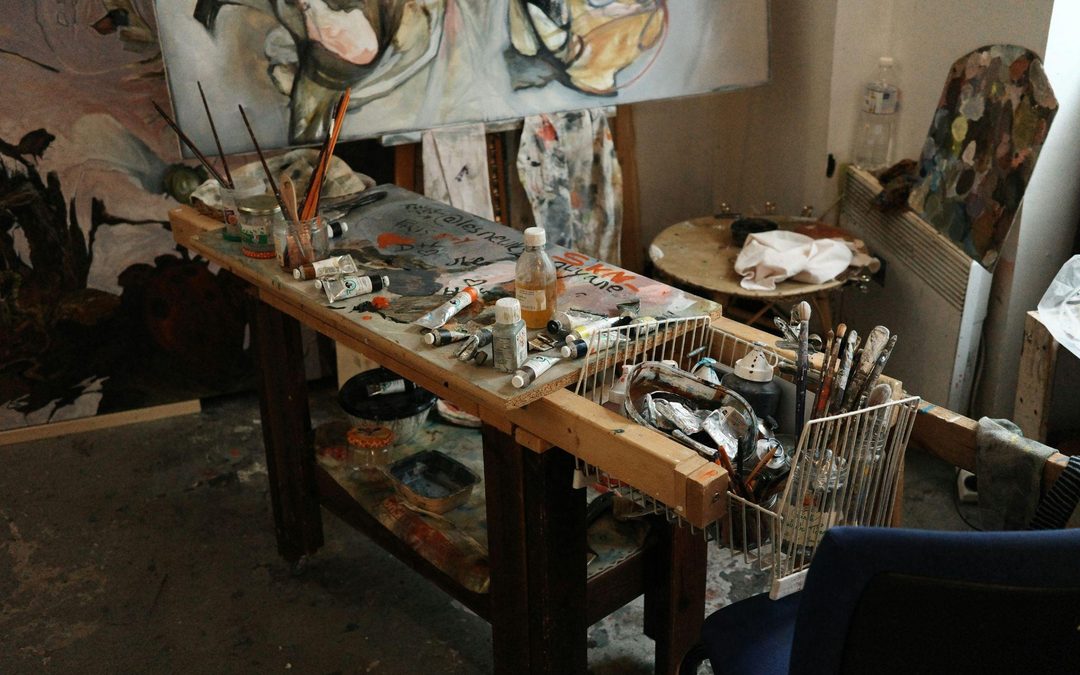
Small drawers, labeled containers, pegboards, magnetic holders, and mobile carts can all help, depending on the craft. Transparent containers are particularly convenient for small components because their contents can be identified without opening every box.
Consider organizing supplies by task rather than simply by product type. Keeping everything needed for one common process together can make it much easier to begin working and clean up afterward.
Leave part of the workbench deliberately empty as well. Available surface area is a useful studio resource, and covering every inch with permanent storage can make larger projects unnecessarily frustrating.
Create Separate Zones for Messy and Clean Work
Not every artistic process should happen on the same surface. Sanding a model beside finished artwork, opening packaging next to wet paint, or performing dusty preparation work near delicate materials creates unnecessary opportunities for contamination and damage.
Even a small studio can benefit from separate zones. One area might handle cutting, sanding, or preparation, while the main workbench remains dedicated to detailed or cleaner work. A separate shelf can provide a safe place for pieces that are drying or waiting for the next stage.
The separation does not need to involve different rooms. Sometimes two tables, a mobile cart, or clearly designated sections of the same workspace are enough.
Design the Studio for Longer Creative Sessions
A good studio should make it easier to concentrate on the project rather than continually noticing problems with the room. Lighting should reach the work clearly, tools should be easy to find, the chair should support the way you work, and messy processes should have appropriate spaces of their own.
It is worth improving the studio gradually. Pay attention to what interrupts you during a typical session and address those issues first. If you constantly search for tools, improve storage. If detailed work becomes difficult at night, upgrade the lighting. If particular processes create dust or other airborne material, examine the ventilation and air-management setup.
The result does not need to look like a professionally designed workshop. A successful artist’s studio is ultimately one that supports the creative process, keeps practical distractions under control, and remains comfortable enough that spending several hours at the workbench feels sustainable.